
Traveling around Japan with a wheelchair or mobility scooter is becoming easier every year, but many visitors still wonder:
Can you take a mobility scooter on the Shinkansen?
Recently, I had the opportunity to assist a visitor using a mobility scooter while traveling from Tokyo to Kyoto on the Tokaido Shinkansen. I had searched online beforehand and found conflicting information, so I’d like to share exactly what happened during our trip.
Can You Take a Mobility Scooter on the Shinkansen?

Based on my experience, the answer was: No.
At Tokyo Station, JR staff informed us that a mobility scooter could not be boarded directly onto the Shinkansen using the boarding ramp.
Instead, they explained that if station assistance and the boarding ramp were required, the passenger would need to transfer to a manual wheelchair provided for boarding.
In our case, we decided not to use the station’s boarding assistance. The guest remained on the mobility scooter until reaching the platform, then a companion helped lift the guest into the reserved seat on the train. The folded mobility scooter was treated as luggage.
Please note that this is our personal experience, not an official JR policy. Rules may vary depending on the type and size of the mobility scooter, so always confirm your situation with JR before traveling.
Are There Lifts at Tokyo Station?
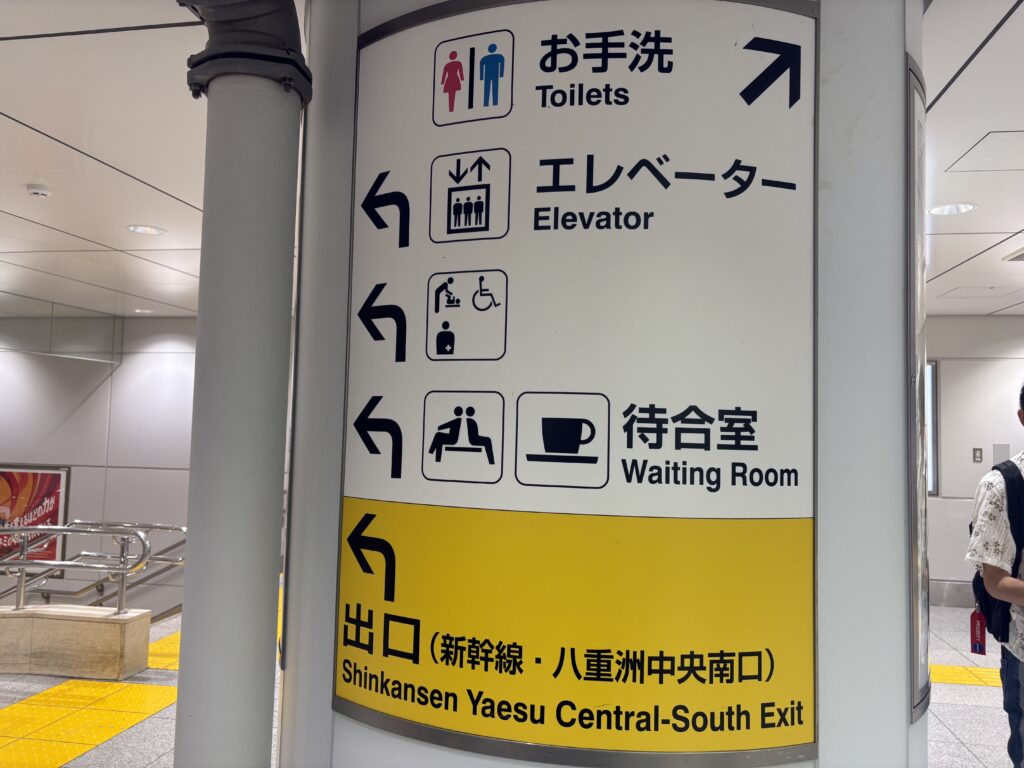
Yes. Tokyo Station is wheelchair accessible.
We found the easiest entrance to be the Yaesu South Exit, which is close to the JR Express Bus Terminal and Bus Terminal Tokyo Yaesu.
Inside the station there are:
- Elevators
- Accessible routes
- Gentle ramps
- Wide ticket gates
Finding the correct entrance in advance made our journey much smoother.
How to Reach the Shinkansen Platform
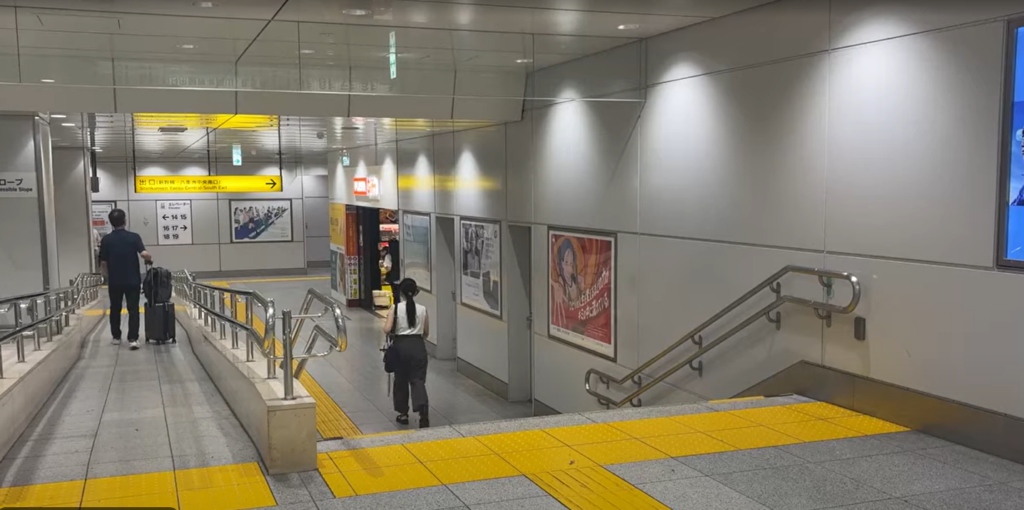
After entering the Tokaido Shinkansen ticket gates, look for the elevator signs.
The elevator to the platform is located past the ticket gates, on the left-hand side before the escalators.
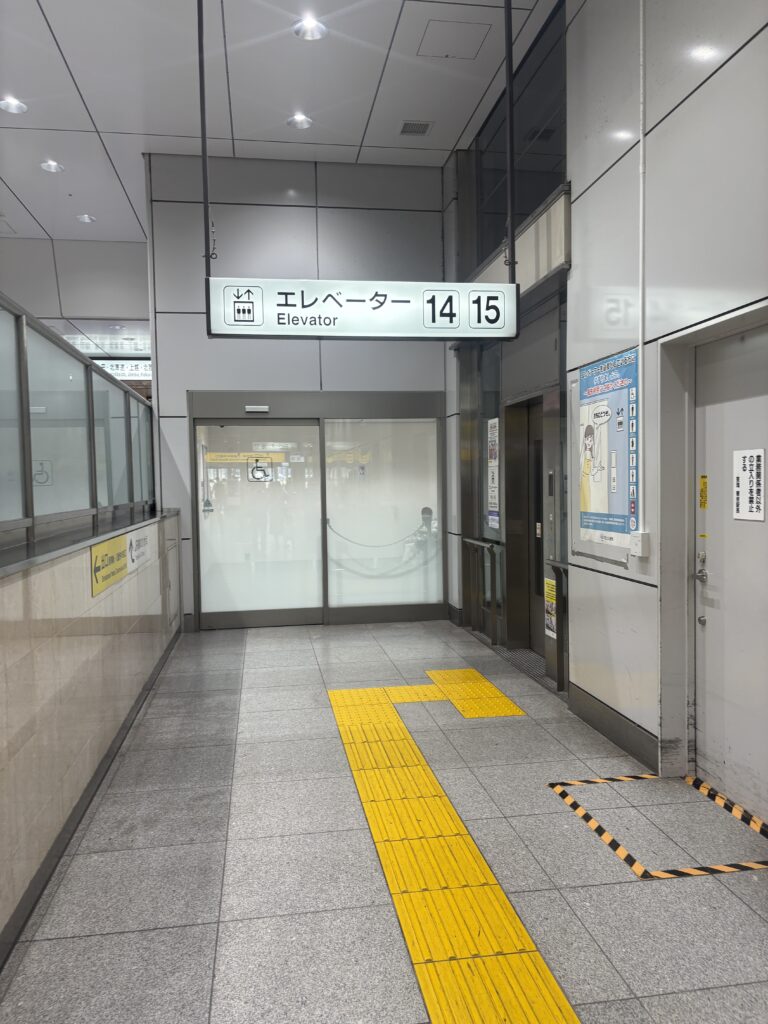
If you’re traveling with a wheelchair or mobility scooter, I recommend allowing extra time to find the elevators and accessible routes.
Asking for Boarding Assistance
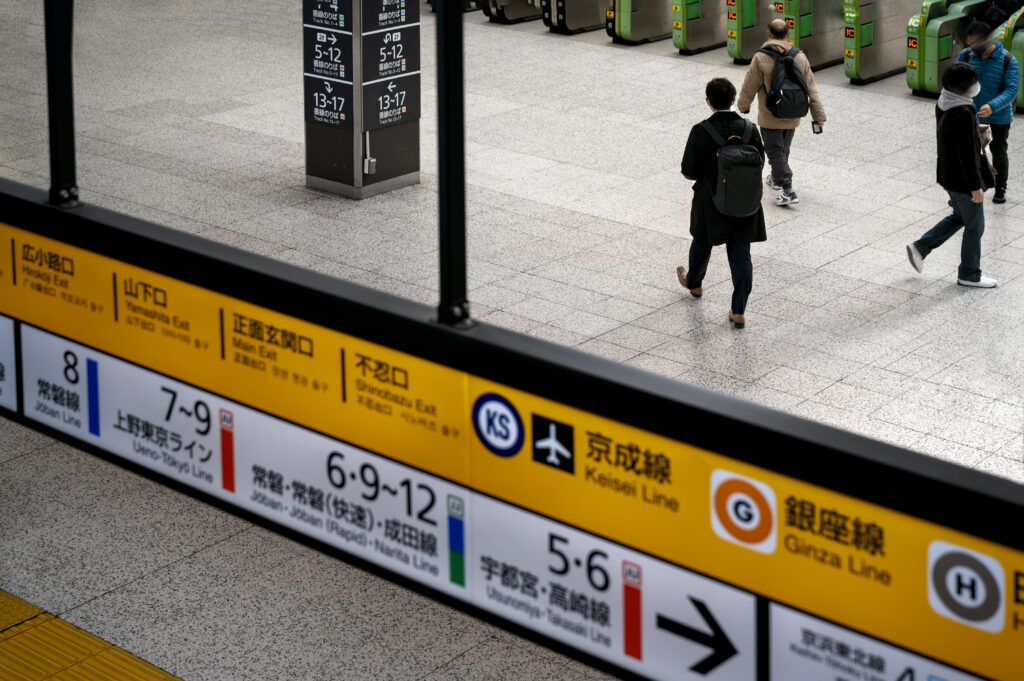
Our original plan was simple.
We asked a station staff member if they could prepare a boarding ramp so the mobility scooter could roll directly onto the Shinkansen.
However, the staff explained that boarding the train on a mobility scooter was not permitted in our situation.
They told us that passengers needing the boarding ramp would first need to transfer to a manual wheelchair.
Since our guest was traveling with a companion, we chose not to request station assistance. The guest rode the mobility scooter to the platform, transferred into the train with assistance, and the folded scooter was carried on as luggage.
What I Learned

Before this trip, I found websites saying mobility scooters could be taken onto the Shinkansen, while others suggested restrictions.
Based on our experience, here are my recommendations:
- ✔ Always contact JR in advance to confirm whether your specific mobility scooter can be accommodated.
- ✔ Arrive early at the station, as staff may need time to check the latest procedures.
- ✔ Mobility scooters are still relatively uncommon in Japan, so some staff may need additional time to verify the rules.
- ✔ Don’t rely entirely on information found online, as regulations and operating procedures may change.
Even as a Japanese Guide, It Was Challenging
Although I live in Japan, this was my first time assisting a guest using a mobility scooter.
Before the travel day, I visited Tokyo Station to check:
- Which entrance had step-free access
- Where the elevators were located
- The best route to the Shinkansen platforms
Without this preparation, it would have been much more stressful.
For international visitors who don’t speak Japanese, navigating one of Japan’s busiest stations while managing a mobility scooter can be even more challenging.
If You’re Worried About Accessible Travel in Japan

Japan is becoming increasingly accessible, but traveling with a wheelchair or mobility scooter often requires advance planning.
If you’d prefer a smoother, stress-free experience, professional assistance can make a big difference.
Book Massage Japan partners with LUNA, an organization that provides private nursing and travel assistance services for visitors who need extra support while traveling in Japan. Whether you need help navigating major stations, assistance during sightseeing, or medical support throughout your trip, their experienced professionals can help you travel with greater confidence.
A trip to Japan is a significant investment. Rather than worrying about transportation and accessibility, consider letting experienced professionals help you enjoy your journey comfortably and safely.
Final Thoughts
My experience showed that traveling on the Shinkansen with a mobility scooter is possible, but it may not be as straightforward as many travelers expect.
Every mobility scooter is different, and station procedures may vary. The best advice I can give is to contact JR before your trip, allow plenty of extra time, and prepare your route in advance.
With a little planning, Japan can be an enjoyable and accessible destination for travelers using wheelchairs and mobility scooters.







No comments yet.